
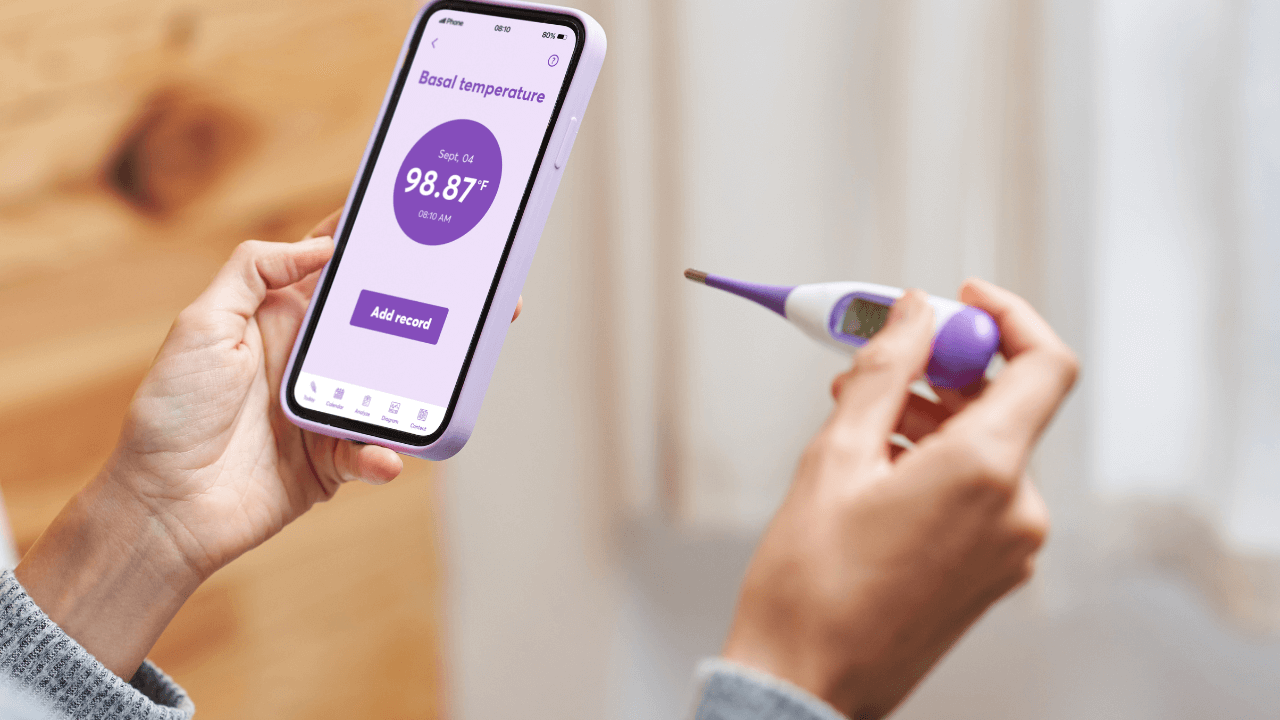
Why BBT Can Be Confusing (And When to Get Extra Support)
If you’re trying to conceive, chances are you’ve heard this advice more than once:
“Just track your BBT.”
So you buy a thermometer.
You start charting.
You wake up early, log numbers, and stare at your graph…
And instead of clarity, you feel more confused than ever.
If this sounds familiar, you’re not doing anything wrong. BBT TTC is helpful, but it’s also one of the most misunderstood fertility tools.
What Is BBT-TTC and Why Do People Use It?
Basal Body Temperature (BBT) tracking is a method of temperature cycle tracking used during TTC (trying to conceive). The idea is simple:
- After ovulation, progesterone rises
- Progesterone increases your resting body temperature
- That temperature shift confirms ovulation has already happened
BBT is often used to:
- confirm ovulation
- understand cycle patterns
- support fertility awareness
- time future cycles more accurately
However, BBT does not predict ovulation, it confirms it after the fact.
That distinction alone explains why many TTC users feel frustrated.
Why BBT-TTC Feels Confusing (You’re Not Alone)
1. BBT Confirms Ovulation—It Doesn’t Predict It
One of the biggest misconceptions with BBT TTC is expecting it to tell you when to have intercourse.
In reality:
- Your temperature rises 1–3 days after ovulation
- By the time you see the shift, your most fertile window has already passed
BBT is great for understanding patterns, but not for real-time timing in the same cycle.
2. Real Life Disrupts “Perfect” Charts
BBT tracking assumes ideal conditions, but real life isn’t perfect.
Your temperature can be affected by:
- poor sleep
- waking up at different times
- illness
- alcohol
- stress
- travel
- wearable vs oral thermometers
This is why many TTC charts look “messy” or inconsistent, even when ovulation is happening.
3. Subtle Hormone Imbalances Can Blur the Pattern
If your chart looks flat, erratic, or unclear, it may point to deeper issues such as:
- low progesterone levels that can affect ovulation and cycle stability
- thyroid imbalance, including TSH-related issues that can affect ovulation and fertility—learn more about thyroid and fertility
- inflammation that may disrupt hormonal balance
- stress-related hormone suppression that can impact your cycle patterns
BBT confusion is often a symptom, not the root problem.
4. Temperature Cycle Tracking Doesn’t Explain “Why.”
BBT shows what happened, but not why it happened.
It won’t tell you:
- Why is ovulation delayed
- Why are cycles irregular
- Why implantation isn’t occurring
- why miscarriages repeat
This is where many people feel stuck, doing everything “right” but still not seeing results.
Common BBT-TTC Frustrations
If you’ve said any of these, you’re not alone:
- “My chart doesn’t look like the examples.”
- “I think I ovulated… but I’m not sure.”
- “My temperature keeps going up and down.”
- “I’m tracking everything and still not pregnant.”
- “I don’t know if my fertile window is accurate.”
BBT TTC can quickly turn from empowering to emotionally exhausting.
What BBT Is Actually Best For
From a clinical and functional fertility perspective, BBT is most valuable when used as one piece of a larger picture.
It’s helpful for:
- confirming ovulation over time
- identifying luteal phase length
- spotting major cycle irregularities
- supporting fertility conversations with providers
It’s not meant to:
- diagnose fertility issues
- replace hormone testing
- predict ovulation in real time
- explain recurrent miscarriage or delayed conception
When BBT is confusing, the answer isn’t “try harder.”
The answer is to get context.
When to Get Extra Support With BBT TTC
Tracking your basal body temperature can be a powerful piece of information, but it doesn’t always give you the full picture on its own. Knowing when to reach out for help can save you time, stress, and emotional energy.
You may benefit from fertility consulting or professional guidance if:
☼ You’ve been tracking BBT for several cycles with no clear pattern
☼ Your cycles vary significantly month to month
☼ You suspect thyroid, hormone, or inflammation issues
☼ You’re TTC longer than expected
☼ You’re preparing for IVF or egg freezing
☼ You’ve experienced pregnancy loss and want clarity
☼ You feel anxious or overwhelmed by daily tracking
When BBT feels confusing or you’re unsure what it means for your plan to conceive, that’s exactly the moment when working with a fertility consultant or a fertility nurse practitioner can make a real difference, guiding interpretation, identifying next steps, and providing support you can trust.
How Fertility Consulting Helps When BBT Isn’t Enough
Instead of staring at charts alone, fertility consulting looks at:
- BBT trends in context
- hormone labs (including thyroid and progesterone)
- inflammation markers
- lifestyle and stress load
- nutrition and supplements
- ovulation timing accuracy
This approach helps answer the real question behind BBT confusion:
“What is my body actually doing, and how do I support it better?”
BBT TTC Is a Tool—Not a Test You Can Fail
BBT TTC Is a Tool—Not a Test You Can Fail
If BBT feels overwhelming, it doesn’t mean you’re bad at tracking.
It means your body may be asking for deeper support.
Going back to a clear and structured basal body temperature chart can often make your patterns easier to understand.
When used correctly:
- BBT provides insight
- patterns become clearer
- timing improves
- confidence increases
And when combined with professional guidance, BBT becomes a bridge, not a burden.
Frequently Asked Questions
What does BBT TTC stand for?
BBT TTC means using basal body temperature tracking while trying to conceive.
Why is my BBT chart inconsistent?
Sleep, stress, illness, hormone imbalance, or thyroid issues can all affect temperature cycle tracking.
Can BBT predict ovulation?
No. BBT confirms ovulation after it has already occurred.
How long should I track BBT before getting help?
If charts remain unclear after 2–3 cycles, additional support is recommended.
Should I stop BBT tracking if it stresses me out?
Stress itself can affect fertility. Support and simplification often help more than stopping entirely.
Final Thoughts
BBT TTC isn’t broken, and neither are you.
But if temperature cycle tracking has left you feeling stuck, anxious, or unsure how to move forward, especially as you prepare for IVF, it’s a sign that your body needs more than charts alone.
As a fertility nurse practitioner, I frequently encounter this. BBT can offer helpful clues, but IVF preparation requires deeper insight into hormones, inflammation, timing, and how your body responds to stress and treatment.
If you’re preparing for IVF or egg freezing, have been trying to conceive longer than expected, or are navigating pregnancy loss, personalized fertility consulting can help turn your BBT data into a clear, supportive plan—so you can move forward with confidence, not guesswork.