
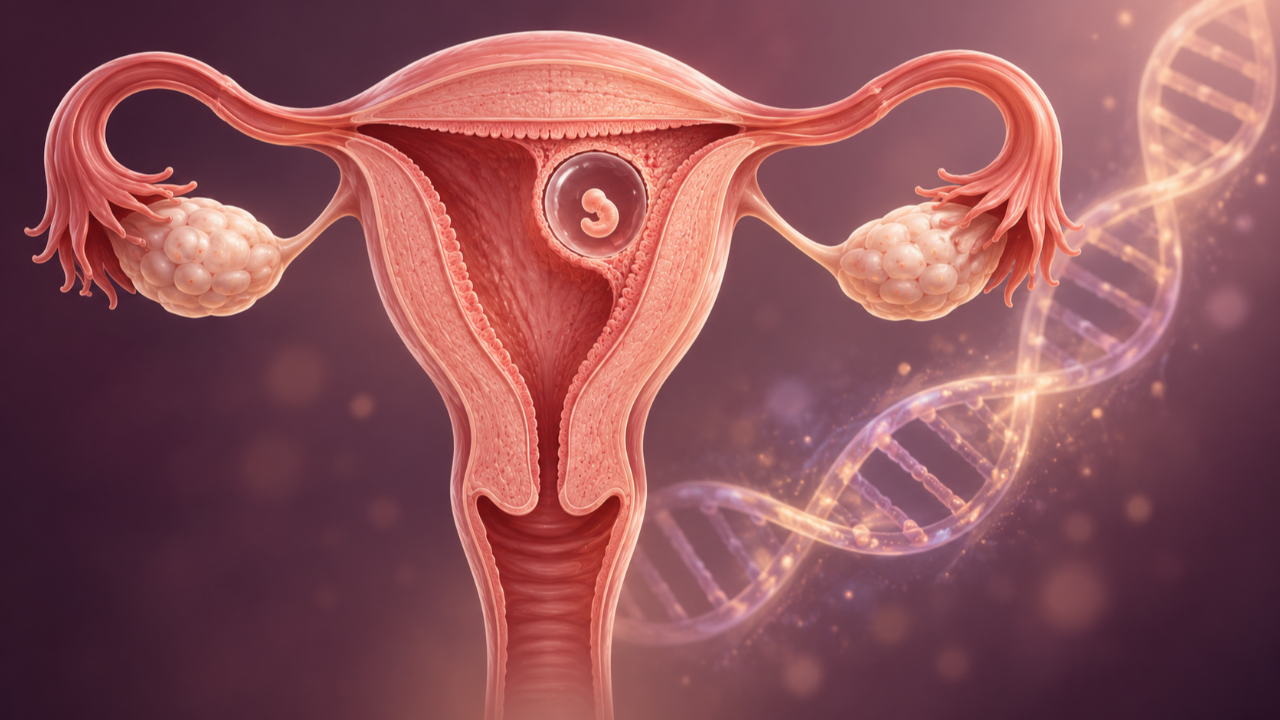
Why Do Miscarriages Happen at 6 Weeks?
If you have just lost a pregnancy at 6 weeks, or you are anxious because you are approaching that point, you are probably searching for one thing: why. It is a painful question, and it deserves a clear, honest answer.
Here it is in short. Most miscarriages at 6 weeks happen because the embryo has a chromosomal difference that prevents it from developing normally. This is usually a random event that happens at conception, and it is not caused by anything you did or did not do. This guide explains what is happening in your body at 6 weeks, the most common causes, what the signs look like, and when it makes sense to look deeper.
What Is Happening in the Body at 6 Weeks of Pregnancy?
Pregnancy is counted from the first day of your last period, so at 6 weeks the embryo is actually only about 4 weeks old. It is tiny, around the size of a lentil, but a great deal is happening.
- The neural tube, which becomes the brain and spinal cord, is closing.
- The heart is forming and typically begins to beat, and a heartbeat is often visible on ultrasound from about 6 to 7 weeks.
- The basic structures of the brain, eyes, and limbs are starting to take shape.
This is one of the most rapid and delicate stages of development. Cells are dividing quickly, and every one of them has to copy its genetic material correctly. When there is a significant error in the chromosomes, development often stops around this time. That is one reason so many early losses show up between 5 and 8 weeks.
What Are the Most Common Causes of Miscarriage at 6 Weeks?
Chromosomal abnormalities. This is the leading cause by far. Roughly half or more of first trimester miscarriages involve an embryo with an abnormal number of chromosomes, such as an extra or missing copy. These errors usually happen by chance when the egg and sperm come together, or in the first cell divisions. The chance rises with age because eggs are more likely to carry chromosome errors as time passes, but it can happen at any age.
Uterine factors. Differences in the shape of the uterus, such as a uterine septum, along with fibroids that press into the uterine cavity, polyps, or scar tissue, can make it harder for a pregnancy to implant and grow.
Hormonal and metabolic conditions. Thyroid disease, poorly controlled diabetes, high prolactin, and PCOS are linked with a higher chance of early loss. If you have PCOS, our guide on how long it takes to get pregnant with PCOS and our post on trying to conceive with PCOS explain how to support your cycle and your pregnancy health.
Immune and clotting conditions. Antiphospholipid syndrome is an autoimmune condition that can cause blood clots in the placenta and is a recognized cause of repeated pregnancy loss.
Sperm related factors. Sperm carry half of the embryo’s genetic material, and damage to sperm DNA has been linked with a higher chance of early loss. Our guide to male infertility causes, tests, and treatment explains why a partner’s health is part of the picture.
Lifestyle and environmental factors. Smoking, heavy alcohol use, very high caffeine intake, and obesity are associated with a higher risk of miscarriage. Certain medications and chemical exposures can also play a role. These factors matter, but they explain only a small share of losses.
No cause found. In many cases, even after evaluation, no clear reason is found. This is frustrating, but it is common and often reflects a chromosomal event that cannot be detected without testing the pregnancy tissue.
Can Anything You Did Cause a Miscarriage?
This is the question many people quietly carry, so let me answer it directly: almost certainly not.
Everyday stress, normal exercise, sex, lifting something heavy, a minor fall, a hot bath, or having used birth control before pregnancy do not cause miscarriage. Miscarriages that happen at 6 weeks are most often caused by something that was decided at conception. You could not have prevented it. If you want to separate fact from fiction, read our guide on common miscarriage myths and facts.
How Common Is Miscarriage at 6 Weeks?
About 10 to 20 percent of known pregnancies end in miscarriage, and roughly 80 percent of those happen in the first 12 weeks. Age plays a role. The risk is about 20 percent at 35, about 40 percent at 40, and higher after that, mostly because of changes in egg quality.
The picture improves once a heartbeat is seen. After an embryonic heartbeat is confirmed at around 6 to 7 weeks, the chance of miscarriage drops to roughly 5 to 10 percent and continues to fall in the following weeks. That is why many people feel a little more hopeful after the first ultrasound, though a scan cannot guarantee how a pregnancy will turn out.
What Are the Signs of Miscarriage at 6 Weeks?
Symptoms vary, and some people have none. Common signs include:
- Vaginal bleeding, from light spotting to heavy bleeding with clots
- Cramping or lower back pain, often stronger than period cramps
- Passing tissue
- A sudden loss of pregnancy symptoms, such as nausea or breast tenderness
- A pregnancy test that stops getting darker, or hCG blood levels that fail to rise as expected
Light spotting is common in early pregnancy and does not always mean a miscarriage, but any bleeding should be checked by your provider. Some losses are silent, meaning the embryo has stopped developing without any bleeding, and they are found at an ultrasound. If you have heavy bleeding that soaks through two or more pads an hour for two hours, severe pain, fainting, or pain on one side of your belly, seek urgent care, since these can also be signs of an ectopic pregnancy.
What If There Is No Heartbeat at 6 Weeks?
Not seeing a heartbeat at a 6 week scan is scary, but it does not always mean a loss. If you ovulated later than you thought or have irregular cycles, you may be earlier than your dates suggest. A heartbeat usually becomes visible once the embryo reaches about 7 millimeters in length, so your provider may ask you to come back in one to two weeks for a repeat ultrasound and may track your hCG levels in the meantime.
If the pregnancy has stopped developing, you will usually be offered three options: waiting for your body to pass the tissue naturally, taking medication to help it pass, or having a minor procedure. The right choice depends on your health, your symptoms, and your preference.
Can You Lower Your Risk of Miscarriage?
Because most early losses come from random chromosomal errors, you cannot prevent all of them. What you can do is support your overall health so your body is in the best possible position:
- Start folic acid before pregnancy. At least 400 micrograms daily is the standard recommendation.
- Manage health conditions. Keep thyroid disease and diabetes well controlled, and talk to your provider before you try to conceive.
- Avoid smoking and heavy alcohol use. Both increase risk. Our guide on what to avoid when trying to conceive has a full list.
- Limit caffeine. Many guidelines suggest keeping it under about 200 milligrams a day, roughly one 12 ounce cup of coffee.
- Nourish your body. Our fertility nutrition guide shows you how to build meals that support egg health and pregnancy.
- Be thoughtful with supplements. See our breakdown of the best fertility supplements and check with your provider before adding anything new.
- Give changes time. Eggs take about three months to mature, which is why our guide on how long it takes to improve fertility naturally suggests preparing in advance.
If you have bleeding in early pregnancy and a history of previous losses, progesterone support may be an option in some cases, so ask your provider whether it is right for you.
Will It Happen Again?
The most reassuring fact is also the most important: most people who have one miscarriage go on to have a healthy pregnancy. After one loss, the chance of another is roughly 20 percent, which is only slightly above the general risk. After two losses it is about 28 percent, and after three it is closer to 40 percent.
Recurrent pregnancy loss, usually defined as two or more losses, deserves a closer look. Evaluation may include:
- Genetic testing of both partners, and sometimes of the pregnancy tissue
- Imaging of the uterus
- Blood tests for thyroid function, blood sugar, prolactin, and antiphospholipid antibodies
- Sperm testing, including DNA fragmentation in some cases
Our guide on when to get fertility testing explains how to decide, and our post on why chemical pregnancies keep happening covers very early losses before 5 weeks. When you do try again, learn when to take a pregnancy test so you can avoid unnecessary stress from testing too early.
Taking Care of Yourself After a Loss
A miscarriage is a real loss, and grief can look different for everyone. You may feel sadness, anger, guilt, or even numbness. Hormone shifts can intensify these feelings. Give yourself time to rest, talk to people you trust, and ask for help if your mood stays low or you cannot function day to day. If you ever have thoughts of harming yourself, contact a crisis line or emergency services right away.
Physically, bleeding can last one to two weeks, and your period usually returns in about four to six weeks. Call your provider if you have a fever of 100.4 degrees Fahrenheit (38 degrees Celsius) or higher, foul smelling discharge, severe pain, or very heavy bleeding.
Frequently Asked Questions About Miscarriage at 6 Weeks
Is miscarriage at 6 weeks my fault?
No. Most miscarriages at 6 weeks are caused by chromosomal abnormalities that occur by chance at conception. Stress, exercise, sex, and everyday activities do not cause them.
Can you have a miscarriage at 6 weeks without bleeding?
Yes. In a silent or missed miscarriage, the embryo stops developing, but your body does not pass the pregnancy right away, so there may be little or no bleeding. It is often found at a routine ultrasound.
Does seeing a heartbeat at 6 weeks mean the pregnancy is safe?
It is encouraging, because the risk of loss drops once a heartbeat is seen, but it does not remove the risk completely. Your risk continues to fall in the weeks that follow.
How long should you wait to try again after a miscarriage?
After one early loss, many providers say there is no medical reason to wait once you feel ready physically and emotionally. Ask your provider for guidance based on your situation.
Can a miscarriage at 6 weeks affect future fertility?
A single early miscarriage does not usually harm your future fertility. Most people go on to have healthy pregnancies, and ovulation can return as soon as two weeks after a loss.
When should I see a specialist after a miscarriage?
Consider an evaluation after two or more losses, or sooner if you are 35 or older or have known risk factors such as thyroid disease, diabetes, or uterine concerns.
You Do Not Have to Go Through This Alone
Understanding why a miscarriage happened will not take away the pain, but it can ease the self blame and help you plan what comes next. If you want personalized support as you heal or prepare to try again, Katy Poole, a fertility consultant and nurse practitioner, offers one on one fertility consulting services to help you understand your labs, your cycle, and your next steps. You can also explore the Get Pregnant Faster program or browse more fertility health resources.