
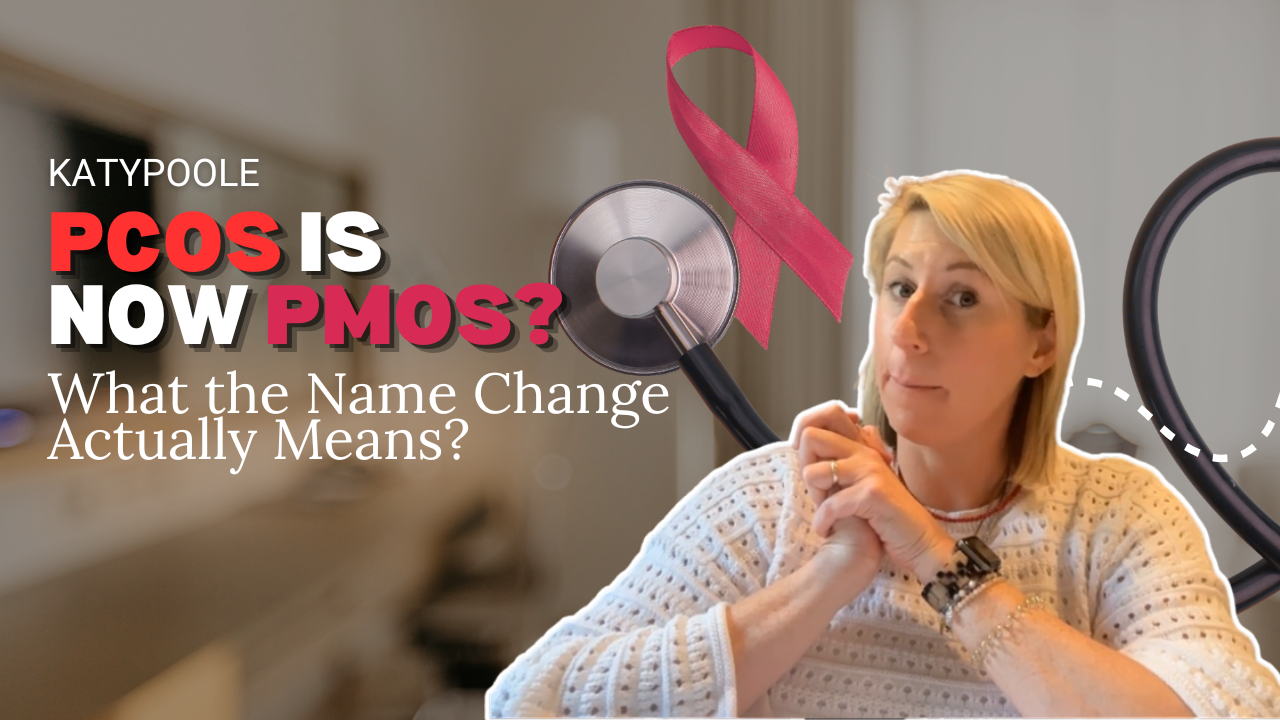
PCOS Is Now Called PMOS. Here Is What That Actually Means for You
If you have been scrolling social media lately and seeing everyone talk about PCOS suddenly being called PMOS, you are probably wondering what that actually means and whether it changes anything for you. I get it, and honestly, I think this is one of the more important conversations happening in women's health right now, so let's break it down together.
I am Katy, a practitioner and fertility consultant, and I have spent years working with women who were diagnosed with Polycystic Ovarian Syndrome, or PCOS. The truth is, this name has been considered inaccurate for a long time. What is finally happening now is that the disorder is being renamed to reflect what it actually is, not just how it looks on an ultrasound.
Watch the full video below for the complete explanation.
What PMOS Actually Stands For
PMOS stands for Polyendocrine Metabolic Ovarian Syndrome. Poly means multiple, endocrine refers to your hormone systems, and that combination tells you right away that more than one hormone producing system is involved, not just your ovaries. The metabolic piece points directly at insulin, blood glucose, and inflammation, and how all of that impacts your cycle, your hormone levels, and your body as a whole. Ovarian is still part of the name because your reproductive organs are still very much involved. So the new name is really describing what is happening throughout your entire body, instead of focusing on one physical detail about your ovaries.
Why Cysts Were Never the Full Picture
Here is something that surprises a lot of people. Most women with this condition never actually had true cysts. What shows up on an ultrasound and gets labeled a cyst is often a cluster of immature follicles, which appear as small fluid filled sacs. That is technically different from a true cyst, the kind you might get elsewhere in the body, like an epidermoid cyst or an actual ovarian cyst. Because these immature follicles looked similar to cysts on imaging, they got lumped into that terminology, and that label stuck for decades even though it was not entirely accurate.
That single word, polycystic, also made the condition sound like it was purely a reproductive issue, something happening only in the ovaries. In reality, it affects your metabolism, your insulin sensitivity, inflammation throughout your body, your mental health, and your cardiovascular risk. It also increases your likelihood of developing certain other health conditions, including some cancers. Framing this as only a reproductive problem left out most of what is actually going on.
A Wake Up Call for How This Condition Gets Treated
For a long time, the conversation around this diagnosis centered on facial hair, weight, and infertility, as if those were the whole story. This name change is a signal that healthcare providers need to start paying much closer attention to the metabolic side of things. Managing this condition well is not just about weight loss or being prescribed a GLP-1 medication. It is about actually educating women on what is happening in their bodies and what they can do about it.
This is genuinely one of the more manageable conditions I work with, but it has to be approached as the whole body issue that it is, not treated as a single symptom to suppress.
Why So Many Women Were Dismissed and Misdiagnosed
I cannot count how many women have come to me after being told for years to simply lose weight, take birth control, or take a pill to manage their symptoms, without anyone actually explaining what was happening inside their bodies or what could genuinely help. That kind of dismissal leads to delayed diagnosis, ongoing confusion, and a lot of unnecessary self blame. Women often felt like they had failed because losing weight did not resolve their symptoms, when weight was never really the root problem to begin with.
Renaming this condition helps validate that experience. It is not just about having a few extra follicles show up on an ultrasound. A more accurate name can lead to earlier diagnosis, better clinical care, improved insurance and pharmaceutical coverage, and a lot less shame for the women living with it.
The Hormonal and Metabolic Reality Behind PMOS
At its core, this is a hormone, metabolic, and inflammatory condition. It makes you more prone to insulin resistance, which means your blood glucose levels tend to swing rather than stay steady, running high and then dropping low. That instability is hard on your fertility, hard on your vascular system, and not good for your long term health or longevity. Those same glucose swings also feed inflammation throughout the body.
I have written before about what I learned tracking my own blood sugar with a CGM, and it is a good example of how much this instability can affect the body.
All of this affects ovulation directly. Because so many follicles are developing at once instead of the usual single dominant follicle, your body often does not produce the hormone signals needed to trigger consistent ovulation. That means ovulation may happen less often and much less predictably. Many women with this condition are still ovulating, they simply cannot predict when, which makes timing intercourse for conception far more difficult. Pregnancy is absolutely still possible, it just tends to take more strategy, and I go deeper into whether you can still get pregnant with PCOS in a separate post.
This condition can also affect sleep and cause weight changes, though not everyone with it is overweight. That matters because some women get overlooked for treatment simply because they do not fit the assumption that this condition always comes with excess weight. It does not, and it shows up in a wide range from mild to more severe, which is exactly why a one size fits all approach never made sense to begin with.
What Effective Treatment Actually Looks Like
Because this is a whole body condition, treatment has to go beyond simply trying to trigger ovulation. A comprehensive approach focuses on improving ovulation quality and consistency, stabilizing blood glucose and insulin levels, and reducing inflammation. Egg quality matters here too, because when the body stays inflamed and glucose stays unregulated, it draws down on your egg reserves and affects your long term health, not just your immediate fertility.
Depending on what is going on for you specifically, that might mean different lab screenings, different medications, or different interventions, including surgery for the right candidates. This should be an ongoing conversation with your healthcare provider so you can get properly screened and matched with the treatment that actually fits your body, rather than a generic protocol. If you want to start with daily habits that help manage insulin resistance, I lay those out in detail, and if inflammation feels like your bigger piece of the puzzle, how inflammation affects egg quality and fertility is a good place to start.
The Good News
There is a lot women can do to improve these symptoms and meaningfully improve their fertility. A name change alone will not instantly fix the condition, but it is a real step in the right direction. It pushes healthcare providers to start thinking seriously about the metabolic piece of this puzzle, and it helps women finally understand what is actually happening in their bodies instead of being told they simply have too many cysts on their ovaries, which was never the full story.
If you have been diagnosed with PCOS or PMOS and you still feel unsure about what your body actually needs, whether IVF is your only path forward, or what you can realistically do to improve your outcomes, that is exactly the kind of work I love helping women through. If you want a fuller roadmap, I cover what to know about trying to conceive with PCOS in another post, and how fertility consulting can help you get pregnant faster explains what personalized support actually looks like. Getting a real handle on a condition you may have lived with for decades, without ever being taught what it means or how to manage it, changes everything. Women start feeling better, moving more, sleeping better, and many go on to conceive on their own once the underlying metabolic picture is actually addressed.
Frequently Asked Questions
Is PMOS a different condition than PCOS?
No. PMOS, or Polyendocrine Metabolic Ovarian Syndrome, is the new name for the condition previously called Polycystic Ovarian Syndrome. The condition itself has not changed, but the name now reflects the hormonal and metabolic systems involved, not just the ovaries.
Do you need ovarian cysts to have PMOS?
No. What often gets labeled as a cyst on ultrasound is usually a cluster of immature follicles rather than a true cyst. Many women with this condition never have actual cysts, which is part of why the old name was misleading.
Can you still get pregnant with PMOS?
Yes. Ovulation tends to be less frequent and harder to predict, which makes timing conception more challenging, but pregnancy is absolutely still possible. Many women improve their outcomes significantly by addressing the underlying metabolic and hormonal factors.
Does PMOS only affect fertility?
No. It is a whole body condition that can affect insulin sensitivity, blood glucose regulation, inflammation, mental health, cardiovascular risk, sleep, and long term disease risk, in addition to reproductive health.
Do you have to be overweight to have PMOS?
No. Not everyone with this condition is overweight, and body size alone should not determine whether you get screened or treated. The condition ranges from mild to severe and looks different from person to person.
Ready to Understand What Your Body Actually Needs
If you have been diagnosed with PCOS or PMOS and you are still not sure what steps to take, whether IVF is really your only option, or how to actually improve your fertility outcomes, you do not have to figure this out alone. Setup a Free Consultation, or check out my course, which walks through everything you need to know about managing this condition and taking real, informed steps forward.