
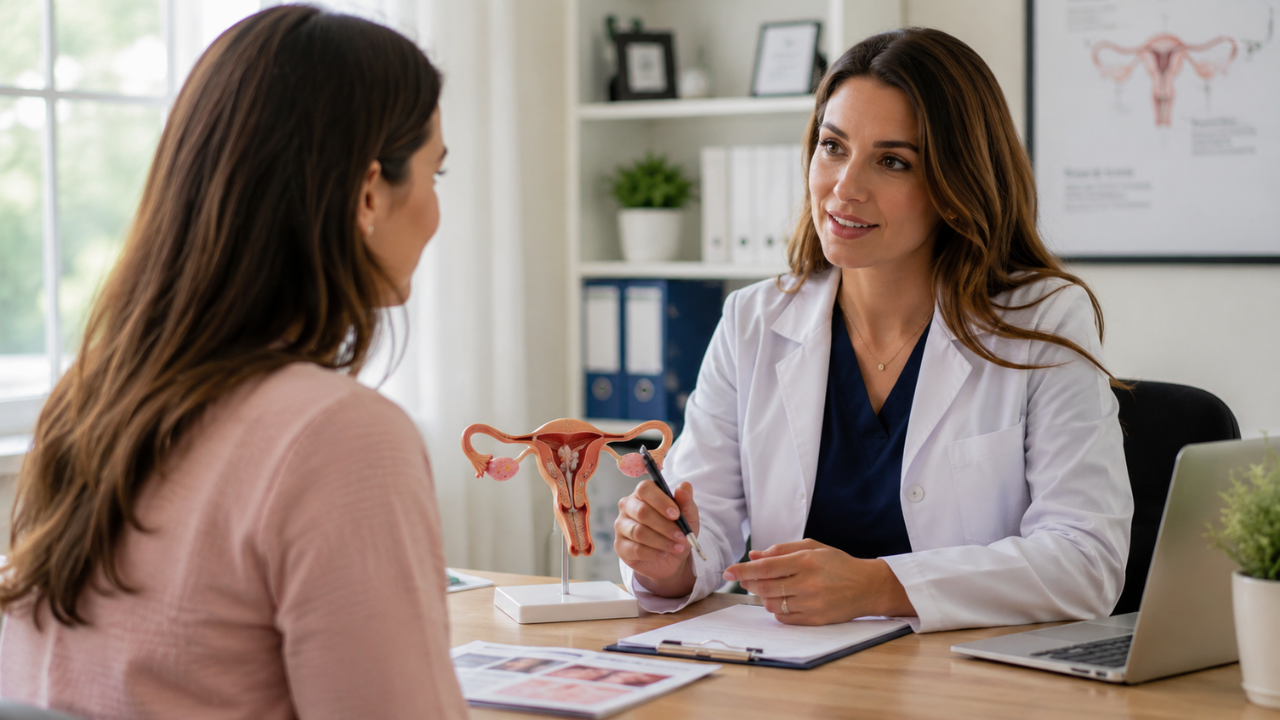
PCOS and Fertility: Can You Still Get Pregnant?
PCOS and fertility are closely connected because polycystic ovary syndrome can affect ovulation and hormone balance. However, many women with PCOS can still get pregnant naturally or with fertility support. While PCOS may increase the risk of fertility challenges, it does not automatically mean infertility.
Receiving a diagnosis of PCOS can bring a mix of emotions. For many women, one of the first concerns is whether they'll be able to have children in the future. Questions about fertility can feel overwhelming, especially when online information often focuses on worst-case scenarios rather than realistic outcomes.
One of the most common questions women ask after a diagnosis is, "Can you get pregnant with PCOS?" The answer is often yes, though the path to pregnancy may look different from one person to another. Some women conceive naturally. Others benefit from lifestyle changes, medication, or fertility treatments.
The good news: many women with PCOS go on to conceive and have healthy pregnancies. Understanding how PCOS affects your body is often the first step toward making informed decisions about your reproductive health.
What Is PCOS?
Polycystic ovary syndrome, commonly known as PCOS, is one of the most common hormonal disorders affecting women of reproductive age. It happens when the body has an imbalance of reproductive hormones, which can interfere with normal ovulation and menstrual cycles.
Despite its name, not every woman with PCOS has ovarian cysts. The condition is diagnosed based on a combination of symptoms, hormone levels, and other clinical findings.
PCOS affects millions of women worldwide and can look different from person to person. Some women notice symptoms early in life. Others don't realize they have PCOS until they begin trying to conceive.
Common symptoms of PCOS may include:
- Irregular or absent periods
- Acne or oily skin
- Excess facial or body hair growth
- Weight gain or difficulty losing weight
- Thinning hair on the scalp
- Multiple small follicles visible on the ovaries during ultrasound
These symptoms come from hormone imbalances that affect the ovaries and reproductive system. Since ovulation plays a central role in conception, these hormonal changes can directly affect fertility.
How Does PCOS Affect Fertility?
To understand the connection between PCOS and fertility, it helps to understand how ovulation normally works.
During a typical menstrual cycle, hormones signal the ovaries to mature and release an egg. This process is known as ovulation. Once the egg is released, it can be fertilized by sperm.
With PCOS, hormonal imbalances can disrupt this process.
Many women with PCOS produce higher levels of androgens, sometimes called male hormones. Elevated androgen levels can interfere with follicle development and prevent eggs from maturing properly. As a result, ovulation may happen irregularly or not at all.
Imagine a woman whose menstrual cycle varies from month to month. One month she has a period after 28 days. The next, after 45 days. Another month, she skips her period entirely. In many cases, these irregular cycles reflect inconsistent ovulation.
When ovulation is unpredictable, identifying fertile windows becomes much harder. Since conception depends on the release of an egg, missing ovulation can significantly reduce the chances of pregnancy during a given cycle.
This is why PCOS ovulation challenges are one of the most common reasons women with PCOS seek fertility evaluation and support.
Can You Get Pregnant With PCOS?
Yes, many women with PCOS do get pregnant.
One of the most important things to understand is that a PCOS diagnosis does not automatically mean you cannot conceive. Fertility outcomes vary widely between individuals.
Some women with PCOS continue to ovulate regularly and may become pregnant without difficulty. Others experience irregular ovulation that makes conception take longer. Some need medical help to restore or stimulate ovulation.
The answer to the common question, "Can you get pregnant with PCOS?" is often encouraging. Many women successfully conceive through a combination of lifestyle improvements, fertility medications, or assisted reproductive treatments.
Success depends on several factors, including:
- Age
- Ovulation frequency
- Overall reproductive health
- Partner fertility factors
- Presence of additional medical conditions
Because every fertility journey is unique, it's important not to compare your experience to someone else's.
Does PCOS Cause Infertility?
PCOS is one of the leading causes of ovulatory infertility, but it does not always result in infertility.
Understanding the difference between infertility and subfertility can help. Infertility generally refers to difficulty achieving pregnancy after a specific period of trying. Subfertility refers to reduced fertility that may make conception take longer, but doesn't prevent pregnancy entirely.
Many women diagnosed with PCOS infertility concerns are actually experiencing irregular ovulation, not complete infertility.
For example, a woman who ovulates only a few times each year still has opportunities to conceive. Those opportunities just happen less often than for someone who ovulates every month.
This distinction is important. It highlights why fertility outcomes can vary so much among women with PCOS.
Some women conceive quickly after discontinuing birth control. Others may spend months or years trying to understand why pregnancy isn't happening.
PCOS increases the likelihood of fertility challenges, but it should not be viewed as a definitive barrier to pregnancy.
Signs That PCOS May Be Affecting Ovulation
Irregular Menstrual Cycles
One of the most recognizable signs of ovulation problems is an irregular menstrual cycle.
Some women experience cycles that change significantly from month to month. Others may miss periods altogether. Irregular cycles often mean ovulation isn't happening consistently.
Long Gaps Between Periods
Periods that occur every few months, rather than monthly, may signal infrequent ovulation.
For example, someone with only four or five periods a year may also be ovulating just a few times annually. Fewer ovulation opportunities can make conception more challenging.
Difficulty Predicting Ovulation
Many women use cycle tracking apps or ovulation predictor kits when trying to conceive. With PCOS, predicting ovulation can be frustrating, since hormone fluctuations may make tracking methods less reliable.
A woman may believe ovulation is approaching, only to discover that her body never actually releases an egg. For women looking for additional ways to better understand their cycle patterns, basal body temperature tracking for ovulation may offer valuable insight into potential ovulation trends.
Lack of Ovulation Symptoms
Some women notice ovulation-related signs, such as cervical mucus changes, mild pelvic discomfort, or increased libido.
When ovulation becomes inconsistent, these signs may disappear or become harder to recognize.
Challenges Conceiving
For many women, ovulation concerns only become apparent after months of unsuccessful attempts to conceive.
Some women discover that PCOS-related ovulation issues become noticeable when they start trying to conceive, which is why understanding the early signs of infertility can help.
If you're noticing any of these patterns, irregular cycles, unpredictable ovulation, or unsuccessful attempts to conceive, it may help to review the 9 early signs you may struggle to conceive and what to do next, which breaks down what your body may be trying to tell you and the steps you can take from there.
How Is PCOS Diagnosed?
Diagnosing PCOS typically involves several steps.
A healthcare provider will start by reviewing your medical history and discussing symptoms such as irregular periods, weight changes, acne, and excess hair growth.
Blood tests are often used to check hormone levels. These tests may measure:
- Testosterone
- Luteinizing hormone (LH)
- Follicle-stimulating hormone (FSH)
- Insulin levels
- Thyroid function
An ultrasound may also be done to examine the ovaries and identify the follicle patterns associated with PCOS.
Diagnosis doesn't rely on a single test. Instead, healthcare providers look at a combination of symptoms, lab findings, and imaging results to determine whether PCOS is present.
Treatment Options for PCOS and Fertility
Lifestyle Changes
Lifestyle improvements are often recommended as a first step for women with PCOS. Even modest changes can positively influence hormone balance and ovulation.
Strategies may include:
- Achieving a healthy weight
- Improving nutrition habits
- Increasing physical activity
- Prioritizing quality sleep
- Reducing chronic stress
Not every woman with PCOS needs to lose weight, but healthy lifestyle habits can support reproductive health regardless of body size.
Ovulation-Inducing Medications
When ovulation remains irregular, healthcare providers may recommend medications designed to stimulate egg release. Common examples include Letrozole and Clomid.
These medications are typically prescribed and monitored by qualified healthcare professionals. The goal is to encourage more predictable ovulation and increase opportunities for conception. Medication effectiveness varies from person to person, so treatment decisions should always be made with a healthcare provider.
Fertility Treatments
Some women need additional fertility support. Treatment options may include:
Intrauterine Insemination (IUI)
IUI involves placing prepared sperm directly into the uterus around the time of ovulation.
In Vitro Fertilization (IVF)
IVF involves retrieving eggs, fertilizing them in a lab, and transferring the resulting embryos into the uterus.
These treatments may be considered when ovulation induction alone doesn't work, or when other fertility factors are involved.
Can Lifestyle Changes Improve PCOS Fertility?
Lifestyle factors can significantly influence reproductive health in women with PCOS.
One reason is the relationship between PCOS and insulin resistance. Many women with PCOS have difficulty processing insulin efficiently. Elevated insulin levels can contribute to hormonal imbalances that interfere with ovulation.
Nutrition often plays an important role here. Rather than focusing on restrictive diets, many healthcare providers encourage sustainable eating patterns that support blood sugar regulation and overall wellness.
Gut health is also worth paying attention to. Digestive conditions like IBS can quietly affect hormones and fertility in ways that are often overlooked. If you're looking for an easy, nutrient-dense meal to add to your rotation, my Veggie-Packed Mushroom Bolognese is a great sustainable option that supports both blood sugar balance and gut health.
Regular exercise may also help improve insulin sensitivity, support hormone balance, and boost overall health.
Sleep quality is another frequently overlooked factor. Chronic sleep deprivation can affect hormone regulation and stress responses, which may influence reproductive health too.
Stress management matters just as much. While stress alone doesn't cause PCOS, ongoing stress can affect hormonal pathways and overall wellbeing. Activities such as walking, mindfulness, counseling, or hobbies may all contribute to a healthier lifestyle.
It's important to keep realistic expectations. Lifestyle changes can improve fertility potential for many women, but results vary based on individual circumstances.
PCOS and Fertility Over Age 30
Age affects fertility regardless of whether a woman has PCOS.
While PCOS-related ovulation issues can be a major factor, age-related declines in egg quantity and quality still happen over time.
Some women mistakenly assume that having PCOS protects them from age-related fertility decline. But reproductive aging continues even when ovulation is irregular.
For women over 30, timing becomes increasingly important. A woman in her early thirties with PCOS may still have many reproductive options available, but waiting several years to seek help after fertility challenges arise could reduce those options.
Understanding both age-related fertility changes and PCOS-specific factors can help you make informed decisions about family planning.
How to Get Pregnant With PCOS
If you're trying to get pregnant with PCOS, the first step is understanding whether you're ovulating regularly. Tracking menstrual cycles, working with a healthcare provider, and addressing lifestyle factors may help improve fertility outcomes.
Women looking for additional guidance and practical strategies to improve their chances of conception may also benefit from resources designed to help them get pregnant faster.
For some women, maintaining a healthy lifestyle and supporting metabolic health can improve ovulation patterns. Others may benefit from ovulation-inducing medications or fertility treatments such as IUI or IVF.
The most effective approach depends on your age, medical history, ovulation patterns, and any additional fertility factors that may be present.
When Should You See a Fertility Specialist?
Knowing when to seek professional guidance can reduce unnecessary delays and provide clarity.
You may want to consult a fertility specialist if:
- You are under 35 and have been trying to conceive for 12 months without success.
- You are over 35 and have been trying for 6 months without success.
- Your menstrual cycles are highly irregular.
- You suspect you are not ovulating regularly.
- You have experienced recurrent pregnancy loss.
- You have additional reproductive health concerns.
Early evaluation can identify underlying issues and help determine the most appropriate next steps.
PCOS and Unexplained Infertility
Fertility challenges are not always caused by a single factor. Even when PCOS is present, other reproductive issues may also contribute to difficulty conceiving.
In some situations, fertility testing may appear normal despite ongoing challenges. This can leave couples feeling confused and frustrated.
Fertility challenges sometimes involve more than one factor, which is why understanding unexplained infertility can matter for many couples, especially when fertility testing appears normal despite ongoing difficulties conceiving.
A comprehensive fertility evaluation can help identify contributing factors and guide treatment decisions when answers aren't immediately obvious.
Frequently Asked Questions
Can you get pregnant with PCOS naturally?
Yes. Many women with PCOS conceive naturally, especially if they ovulate regularly or respond well to lifestyle changes. Others may benefit from fertility treatments.
Does PCOS always cause infertility?
No. PCOS increases the risk of fertility challenges but does not automatically cause infertility. Many women with PCOS become pregnant successfully.
How does PCOS affect ovulation?
PCOS can disrupt hormone levels that regulate egg development and release. This may result in irregular ovulation or missed ovulation cycles.
Can losing weight improve fertility with PCOS?
For some women, weight management may improve hormone balance and ovulation frequency. However, fertility outcomes vary, and not all women with PCOS need to lose weight.
When should I seek fertility treatment for PCOS?
You should consider consulting a fertility specialist if you've been trying to conceive for 12 months under age 35, 6 months over age 35, or if you experience significant ovulation irregularities.
Can you have PCOS and still be fertile?
Yes. Many women with PCOS remain fertile and are able to conceive naturally. While PCOS can affect ovulation and make pregnancy more difficult for some women, fertility experiences vary widely. Some women continue to ovulate regularly and may become pregnant without fertility treatment.
Can you have PCOS and be very fertile?
PCOS affects every woman differently. Some women with PCOS may still ovulate frequently enough to conceive without difficulty. Although PCOS is associated with ovulation problems, it does not automatically reduce fertility in every case. Individual hormone patterns, age, and overall reproductive health all play a role.
What is the best food for PCOS and fertility?
There is no single "best" food for PCOS and fertility. However, many healthcare professionals recommend a balanced eating pattern that includes lean proteins, vegetables, fruits, healthy fats, and high-fiber carbohydrates. Foods that support stable blood sugar levels may help improve hormone balance and overall reproductive health.
Does PCOS and endometriosis affect fertility?
Both PCOS and endometriosis can affect fertility, although they do so in different ways. PCOS primarily impacts ovulation, while endometriosis may affect the reproductive organs and implantation process. When both conditions are present, fertility challenges may become more complex, making evaluation by a fertility specialist especially important.
Bottom Line
PCOS and fertility are closely linked, but a diagnosis of PCOS does not mean pregnancy is impossible. While hormone imbalances and ovulation challenges can make conception more difficult, many women with PCOS achieve successful pregnancies naturally or with medical support.
Understanding how PCOS affects ovulation, recognizing potential fertility challenges early, and seeking appropriate guidance can help you navigate your fertility journey with greater confidence.
Most importantly, remember that every woman's experience is different. Fertility outcomes depend on many factors, and there is no single path that works for everyone. If you're concerned about your ability to conceive, speaking with a qualified healthcare provider or fertility specialist can help you understand your options and create a plan tailored to your individual needs.
Continuing to learn about fertility, ovulation, and reproductive health can also help you make more informed decisions throughout your journey. For women who want a deeper understanding of these topics, a comprehensive fertility course may provide additional education and support.
If you have questions about PCOS, ovulation, or your fertility journey, speaking with a qualified fertility professional can help provide clarity and guidance. If you need personalized support or would like help understanding your options, you can contact Katy Poole for additional guidance.
With the right information, support, and care, many women with PCOS move forward toward building the families they hope for.