
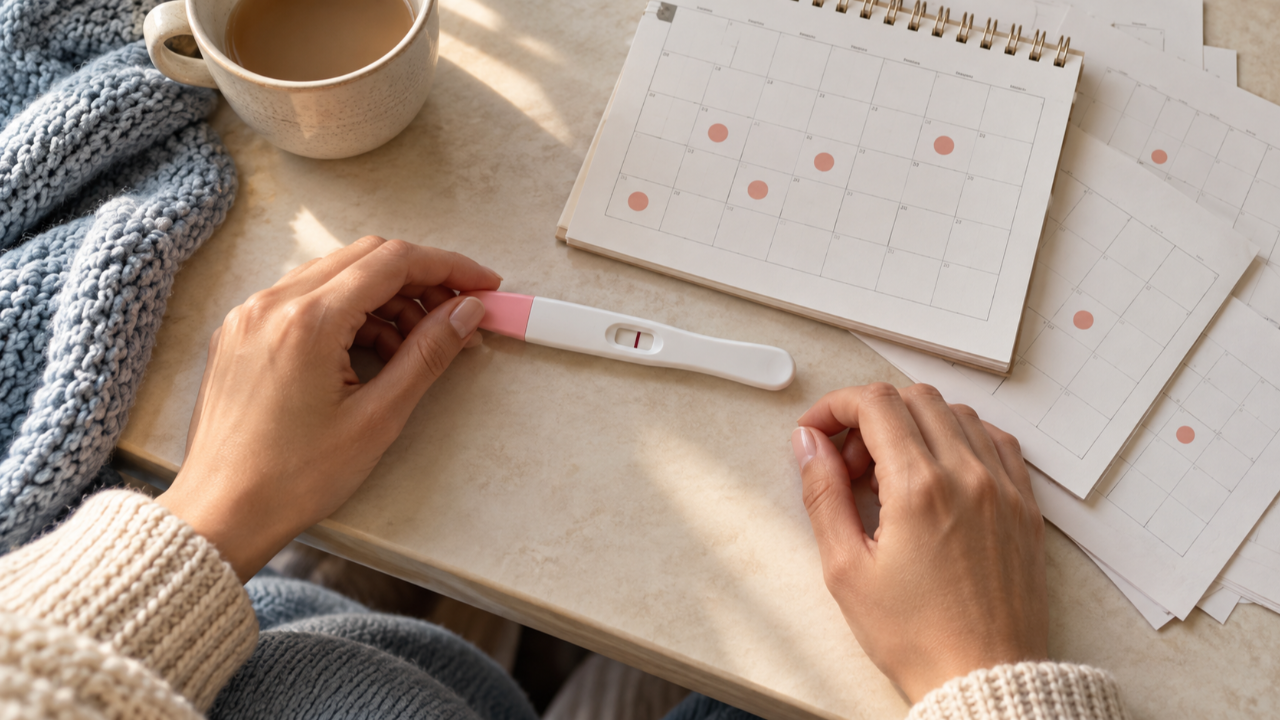
Not Pregnant After 6 Months? Don't Wait
You have tracked your cycle, timed intercourse, taken the vitamins, and taken a test every month with your heart in your throat. Six months have passed and you are still not pregnant. Maybe someone told you to relax and give it time. Maybe you are wondering whether it is time to ask for help.
Here is the honest answer: sometimes waiting is fine, and sometimes it costs you valuable time. Whether you should wait depends on your age, your cycles, and your health history. This guide helps you work out where you stand, understand what might be getting in the way, and decide what to do next.
How Many Months of Trying Is Considered Infertile?
Doctors use a simple rule based on your age.
If you are under 35, infertility is generally defined as 12 months of regular, unprotected intercourse without a pregnancy. If you are 35 or older, the timeline shortens to 6 months. If you are 40 or older, most specialists recommend starting an evaluation right away rather than waiting.
That is why six months is such an important mark for so many women. It is the point where an evaluation is recommended if you are 35 or older.
It also helps to know what normal looks like. For a healthy couple in their late twenties or early thirties, the chance of pregnancy in any single cycle is only about 20 percent. About 85 percent of couples conceive within a year of trying, which means it is common for pregnancy to take several months even when everything is working well. According to the CDC, roughly 1 in 5 women in the United States between 15 and 49 with no previous births is unable to get pregnant after one year of trying.
Please do not wait for the 6 or 12 month mark if any of these apply to you:
Your periods are irregular, very far apart, or missing. Cycles shorter than 21 days or longer than 35 days can signal that you are not ovulating regularly.
You have a diagnosis or history that can affect fertility. This includes PCOS, endometriosis, fibroids, thyroid disease, pelvic infections, tubal surgery, or past cancer treatment.
You have had two or more pregnancy losses.
Your partner has a known sperm or testicular concern.
You are 35 or older, or you are planning to use IVF or freeze eggs at some point.
Being called infertile does not mean you cannot get pregnant. In most cases it means pregnancy is taking longer than expected and you deserve answers. Many people who meet the clinical definition go on to conceive with the right support. If you are under 35 with regular cycles and no known issues, continuing to try until 12 months is reasonable, but nothing stops you from getting early testing or guidance sooner.
Why Is My Body Not Letting Me Get Pregnant?
First, let me gently reframe this question. Your body is not refusing to get pregnant. In most cases, something specific is interfering, and that something can often be identified. Pregnancy requires several things to line up: a healthy egg released at the right time, healthy sperm, open fallopian tubes so the two can meet, and a uterus ready for implantation. If one link is off, conception becomes harder.
Here are the most common reasons.
Ovulation problems. If you are not ovulating regularly, you are not releasing an egg to fertilize. Polycystic ovary syndrome (PCOS) is the most common cause, affecting roughly 8 to 13 percent of women of reproductive age. Thyroid conditions, high prolactin, extreme exercise, low body weight, and high stress can also disrupt ovulation. If you suspect PCOS, read our guides on PCOS and fertility and trying to conceive with PCOS.
Endometriosis. This condition occurs when tissue similar to the uterine lining grows outside the uterus. It affects about 1 in 10 women of reproductive age, and up to half of women who struggle with infertility have it. It can cause inflammation, scarring, and blocked tubes. Some women have severe symptoms and others have almost none. Learn more in our article on endometriosis and fertility.
Declining egg quantity and quality. Every woman is born with all the eggs she will ever have, and both the number and the quality decline with age, with a faster drop after 37. A blood test called AMH helps estimate your ovarian reserve. It tells you about quantity, not quality, and it does not predict by itself whether you can conceive naturally. If you have had a result and are unsure what it means, our guide to AMH levels by age can help.
Blocked or damaged fallopian tubes. Past pelvic infections, endometriosis, or abdominal surgery can block the tubes so egg and sperm never meet. This often causes no symptoms.
Uterine factors. Fibroids, polyps, scar tissue, or an unusually shaped uterus can make implantation harder.
Male factor infertility. This is the one many couples overlook. In about one third of cases the cause is on the male side, another third on the female side, and the rest involve both partners or no clear cause. Male factors contribute in up to half of all couples who struggle. Habits like heat exposure can matter, and you can read about how temperature affects sperm health and male fertility.
Unexplained infertility. For a meaningful share of couples, standard tests come back normal. This is frustrating, but it does not mean nothing can be done. Egg quality, inflammation, nutrition, sleep, stress, and timing can still be explored.
The right next step is testing. A basic evaluation usually includes a review of your history and cycles, blood tests for hormones such as AMH, FSH, thyroid hormones and prolactin, a transvaginal ultrasound to look at your uterus and ovaries, a test to check whether your tubes are open, and a semen analysis for your partner. Testing both of you at the same time saves months.
What Makes a Woman Extremely Fertile?
No one can guarantee fertility, and even the most fertile couples have only about a 20 to 25 percent chance of pregnancy per cycle. That said, certain factors are linked with a higher chance of conceiving quickly.
Age. This is the single biggest factor. Fertility is generally highest in your twenties and early thirties. The chance of conceiving per cycle averages about 20 percent in your late twenties and early thirties and falls to roughly 5 percent per cycle by 40. Egg quality is strongly tied to age, and that is something diet and supplements cannot fully reverse.
Regular ovulation. Cycles that arrive every 21 to 35 days, with signs of ovulation such as fertile cervical mucus that looks like raw egg white, are a good sign that you are releasing an egg each month.
A healthy ovarian reserve. Having a good number of remaining eggs gives you more chances each month.
Open tubes and a healthy uterus. Structural health is quietly essential and often invisible without imaging.
Balanced hormones and metabolic health. Healthy thyroid function, stable blood sugar, and balanced reproductive hormones all support ovulation. Being significantly underweight or overweight can disrupt cycles.
Good nutrition. Diets rich in vegetables, fruit, whole grains, legumes, healthy fats, and quality protein are linked with better fertility outcomes. The CDC recommends that anyone who could become pregnant take 400 micrograms of folic acid daily. Our fertility nutrition guide shows you how to eat for conception, and our breakdown of the best fertility supplements explains what is worth taking and what is not.
Healthy habits. Not smoking, limiting alcohol, keeping caffeine under about 200 milligrams a day, sleeping well, and managing stress all support fertility. Our guide on what to avoid when trying to conceive covers the habits that matter most.
Smart timing. Your fertile window is about six days, ending on the day you ovulate. An egg survives only 12 to 24 hours, but sperm can survive up to five days. Having intercourse every one to two days during your fertile window gives you the best odds, and the two days before ovulation are the most fertile.
A healthy partner. Sperm quality is half of the equation. Sperm take about 74 days to develop, so improvements often take around three months to show up. To set realistic expectations, read how long it takes to improve fertility naturally.
If you read this list and realize several things are not where you want them to be, that is useful information, not a failure. Most of these factors can be improved, and knowing which ones matter for you is the first step.
What Should You Do Right Now?
Start tracking in a way that gives you real data. Note your cycle length, ovulation signs, and when you have intercourse. This helps any provider you see.
Book a basic evaluation if you meet the criteria. If you are 35 or older, have irregular cycles, or have a known risk factor, call your doctor or a fertility specialist now.
Get your partner tested. A semen analysis is simple, inexpensive, and often the fastest way to rule out half of the puzzle.
Look at the habits you can change. Nutrition, sleep, movement, stress, alcohol, and smoking are all within your control.
Be careful with the two week wait. The days between ovulation and your test are emotionally intense. Our article on two week wait symptoms explains what your symptoms really mean and what they do not.
Get guidance that looks at the whole picture. Rushed appointments and endless internet searches leave many women feeling lost. A fertility consultant can help you make sense of labs, spot what has been missed, and build a plan.
Frequently Asked Questions
Is it normal to not be pregnant after 6 months of trying?
Yes. Even for healthy couples, it often takes several months, and only about 20 percent of couples conceive in any given cycle. If you are under 35 with regular cycles, six months without a pregnancy is not unusual. If you are 35 or older, it is the point at which doctors recommend an evaluation.
Can I get pregnant if I have irregular periods?
Yes, but it may take longer and you may need help. Irregular cycles often mean ovulation is infrequent or absent, which makes timing intercourse difficult. Talk to a provider rather than waiting, since conditions like PCOS and thyroid problems are very treatable.
How often should we have intercourse to get pregnant?
Every one to two days during your fertile window is a good target. You do not need to have intercourse more often than that, and you do not need to restrict it to one perfect day.
Does stress stop you from getting pregnant?
Everyday stress is unlikely to prevent pregnancy on its own, but chronic stress can affect sleep, hormones, ovulation, and sexual frequency. Managing stress supports your overall health and your ability to stay consistent with a plan. It should not be used to blame you for not conceiving.
Should my partner get tested too?
Yes. Male factors contribute in up to half of couples who struggle to conceive, and a semen analysis is one of the quickest and least invasive tests available. Testing both of you at the same time avoids lost months.
Does age matter if I am in my early thirties?
It does matter, but it is not a cliff. Fertility declines gradually, with a faster drop after 37. If you are in your early thirties and want to understand your options, getting baseline testing early gives you information and choices.
Can I still get pregnant if I have been told I am infertile?
Many people can. Infertility is a description of how long pregnancy has taken, not a final answer. Depending on the cause, treatment can include lifestyle changes, medication to support ovulation, surgery, IUI, or IVF. Timing and the right plan make a real difference.
Take the Next Step
If you have been trying for six months or more, you do not have to keep guessing. The sooner you understand what your body is telling you, the sooner you can act with confidence.
Katy Poole is a fertility consultant and nurse practitioner who helps women and couples dig into the root causes behind delayed pregnancy. You can explore her fertility consulting services, learn about the Get Pregnant Faster program, browse more fertility health resources, or set up a free consult to talk through your next steps.