
Fertility Testing: What to Check Before You See a Specialist
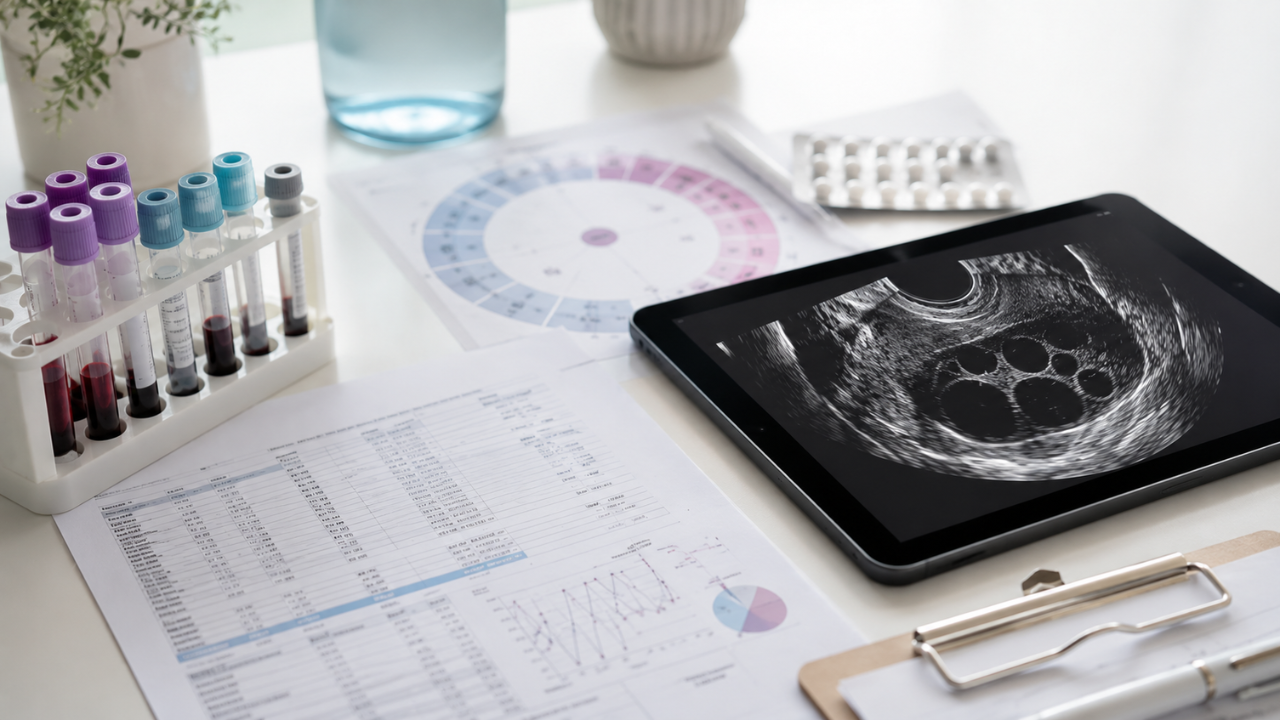
Fertility testing helps evaluate your reproductive health by assessing ovarian reserve, hormone levels, ovulation, fallopian tube function, and uterine health. Whether you're planning a pregnancy, have been trying to conceive without success, or simply want a clearer picture of your fertility, these tests can help identify potential issues early and guide your next steps. Most fertility evaluations involve blood tests, ultrasound, and, in some cases, imaging procedures such as a hysterosalpingogram (HSG).
Getting tested does not mean something is wrong. It simply gives you the information you need to make informed decisions about your reproductive health instead of relying on guesswork. This article explains the most common fertility tests, what each one measures, when to consider testing, and how to understand your results.
Key Takeaways
- Fertility testing covers ovarian reserve, hormones, fallopian tubes, and uterine health.
- You do not need to wait until you have been trying for a year to consider testing.
- Many fertility tests can be done through your regular doctor or a fertility specialist.
- Results are most useful when interpreted together, not as individual numbers in isolation.
- Testing gives you a starting point, not a final verdict on your ability to conceive.
What Is Fertility Testing?
Fertility testing is an evaluation of the factors that influence your ability to conceive. It is not a single test but a collection of assessments that together give a picture of your reproductive health.
For women, this typically includes blood tests to evaluate hormone levels and ovarian reserve, an ultrasound to assess the ovaries and uterus, and sometimes additional imaging or procedures to evaluate the fallopian tubes. The combination of these tests allows a fertility specialist or healthcare provider to identify any factors that may be making conception more difficult and to recommend next steps based on your specific situation.
Fertility testing is not only for women who have been struggling to conceive. Many women choose to test proactively before they start trying, particularly if they are in their mid-thirties or have a health history that may affect fertility. Having a baseline picture of your reproductive health before you begin trying gives you the advantage of time and information.
When Should You Consider Fertility Testing?
There is no single right time to get a fertility evaluation, but there are several situations where it makes clear sense to pursue one.
If you are under 35 and have been trying to conceive for twelve months without success, that is the standard guideline for seeking an evaluation. If you are 35 or older, that window shortens to six months. These timelines exist because fertility naturally declines with age, and earlier evaluation means more options and more time.
But you do not need to wait for these benchmarks if other factors are in play. If you have a known condition that may affect fertility, such as endometriosis, PCOS, thyroid dysfunction, or irregular cycles, seeking an evaluation before you start trying is a practical and proactive step. The same applies if you have had previous pelvic surgery, a history of sexually transmitted infections, or recurrent early pregnancy loss.
Fertility testing before trying to get pregnant is also worth considering if you are simply someone who wants to understand your body before you begin. Knowing your AMH level, whether your tubes are open, and how your hormones look at baseline gives you information that most women only discover once they have already been trying for months.
If you are unsure whether now is the right time to be tested, our guide to early signs of infertility can help you identify patterns that may be worth discussing with your healthcare provider before you begin trying.
What Tests Are Needed to Check Fertility?
A standard female fertility workup typically covers four main areas: ovarian reserve, hormones, fallopian tubes, and the uterus. Here is what each involves and why it matters.
| Test | What It Checks | When It's Done |
| AMH (Anti-Müllerian Hormone) | Ovarian reserve (remaining egg supply) | Any day of the menstrual cycle |
| Day 3 FSH & Estradiol | Ovarian function and reserve | Day 2 or 3 of the menstrual cycle |
| Antral Follicle Count (AFC) | Ovarian reserve (small developing follicles) | Early in the menstrual cycle |
| TSH | Thyroid function | Any time |
| Prolactin | Hormone levels that may affect ovulation | Any time |
| Progesterone | Confirms ovulation and assesses luteal phase function | About 7 days after ovulation |
| Hysterosalpingogram (HSG) | Fallopian tube patency and uterine cavity | Usually days 7-10 of the menstrual cycle |
| Transvaginal Ultrasound | Ovaries, uterus, and structural abnormalities | Usually early in the menstrual cycle |
Ovarian Reserve Testing
Ovarian reserve refers to the number of eggs remaining in your ovaries and is one of the most important pieces of the fertility picture.
AMH (Anti-Mullerian Hormone): AMH is produced by the small follicles in your ovaries and is one of the most reliable indicators of how many eggs you have remaining. It can be measured on any day of your cycle, which makes it convenient. A higher AMH generally indicates a larger egg supply, while a lower AMH suggests a smaller reserve. Importantly, AMH measures quantity, not quality, so a low result does not make pregnancy impossible. For a detailed breakdown of what AMH levels mean by age, Learn more about how AMH levels relate to fertility and what the results may mean for your reproductive health.
Antral Follicle Count (AFC): This is an ultrasound measurement that counts the number of small follicles visible in both ovaries at the start of a cycle. It complements AMH well and gives a direct visual picture of the follicle pool. AFC and AMH together provide a more complete assessment of ovarian reserve than either test alone.
Day 3 FSH and Estradiol: FSH, or follicle-stimulating hormone, is measured on day 2 or 3 of your cycle. When ovarian reserve is low, the brain produces more FSH to try to stimulate the ovaries. An elevated FSH on day 3 can signal diminished reserve, though it fluctuates between cycles, which makes it less reliable as a standalone marker than AMH.
Hormonal Testing
Beyond ovarian reserve markers, a broader hormonal panel helps identify whether the hormonal environment is supporting fertility.
Thyroid function (TSH): Thyroid dysfunction, even at subclinical levels, can interfere with ovulation, implantation, and early pregnancy. TSH is a routine part of most fertility workups for good reason. Both hypothyroidism and hyperthyroidism can affect reproductive outcomes, and thyroid levels are treatable when identified.
Prolactin: Elevated prolactin can suppress ovulation and shorten the luteal phase. It is often included in a standard fertility panel and is worth testing if you have irregular cycles or a history of luteal phase issues.
LH and estradiol: These hormones give additional context about how the cycle is functioning and are often measured alongside FSH on day 3 to complete the picture of follicular phase function.
Progesterone: A mid-luteal progesterone test, typically performed about seven days after ovulation (around day 21 in a 28-day cycle), confirms that ovulation has occurred and provides insight into luteal phase function. Low progesterone during this phase may affect implantation and early pregnancy maintenance.
Fallopian Tube Assessment
For conception to occur naturally, at least one fallopian tube needs to be open and functional. The egg travels through the tube after ovulation to meet sperm, and fertilization typically occurs in the tube before the embryo travels to the uterus.
Hysterosalpingogram (HSG): An HSG is an X-ray procedure that uses dye to outline the uterine cavity and fallopian tubes. It shows whether the tubes are open or blocked and can also identify abnormalities in the shape of the uterus. It is usually done between days 7 and 10 of the cycle and takes about 15 to 30 minutes. Some women find it uncomfortable, particularly if a tube is blocked, but it provides important information about tubal function that cannot be obtained through blood tests alone.
Sonohysterogram (SHG): This is an ultrasound procedure that uses saline to outline the uterine cavity. It is particularly good at identifying polyps, fibroids that protrude into the cavity, or other structural issues inside the uterus. It is sometimes used alongside or instead of HSG depending on the clinical picture.
If you want to understand more about what happens when tubal function is compromised, learn more about blocked fallopian tubes and how they can affect conception and treatment options.
Uterine Assessment
The uterus needs to provide a healthy environment for implantation and pregnancy development. Structural issues inside the uterine cavity can interfere with implantation even when everything else looks normal.
A transvaginal ultrasound is typically the first step and can identify fibroids, polyps, or other abnormalities. In some cases, an MRI or hysteroscopy may be recommended for a more detailed look, particularly if there is a history of recurrent loss or if initial imaging raises questions.
How Do I Get Tested for Fertility?
The process of getting fertility tested is more straightforward than many women expect. It typically starts with a conversation with your healthcare provider or a fertility specialist who reviews your history and recommends the appropriate tests based on your situation.
Many of the blood tests involved in a fertility workup, including AMH, FSH, estradiol, TSH, and progesterone, can be ordered by your regular OB-GYN or primary care doctor. The imaging studies, particularly HSG, are more often coordinated through a reproductive endocrinologist or fertility clinic.
If you are unsure where to start, beginning with a fertility consultation is often the most efficient path. Rather than ordering individual tests piecemeal, a consultation gives you a structured evaluation where the results are interpreted together in the context of your full history and goals. This is the kind of comprehensive look that a Deep Dive Fertility Evaluation is designed to provide.
How Do They Test If a Woman Is Fertile?
Testing female fertility involves a combination of blood tests, ultrasound, and sometimes additional procedures, as outlined above. But it is worth understanding what fertility testing can and cannot tell you.
What testing can tell you: your ovarian reserve, whether you are ovulating, how your hormones look across the cycle, whether your tubes are open, and whether there are structural issues in the uterus.
What testing cannot tell you with certainty: the quality of your eggs, how long it will take you to conceive, or whether a specific cycle will result in pregnancy. Egg quality is influenced by age and other factors but cannot currently be tested without retrieving and examining eggs directly, which is only done in the context of IVF or egg freezing.
This is why fertility testing gives you a starting point and a direction rather than a definitive answer about your future. Most women who go through a fertility workup find that the results give them useful information that helps them make better decisions, even when the answers are not the ones they were hoping for.
Fertility Testing at Home: What Are Your Options?
At-home fertility testing has become increasingly accessible, and there are now several options available that can give you some initial information before or alongside a clinical evaluation.
At-home AMH tests are available and involve a finger-prick blood sample that is sent to a lab. The results give you an AMH level that can be a useful starting point, though the accuracy and reference ranges vary between products. If your at-home result raises concerns, a clinical blood test through a lab is worth doing for confirmation.
Ovulation predictor kits (OPKs) detect the LH surge that occurs before ovulation and are a practical way to confirm that ovulation is occurring and to identify your fertile window. They do not tell you about ovarian reserve or tube function, but they are a useful first tool for understanding your cycle.
Basal body temperature tracking, while not technically a test, provides meaningful information about whether and when ovulation is occurring across multiple cycles. It is worth doing alongside any other testing as it adds a layer of cycle data that blood tests on specific days cannot capture.
It is important to understand that at-home testing gives you partial information. The full picture of fertility requires clinical testing, particularly for tube function and uterine structure, which cannot be assessed at home.
How Can I Test My Fertility Levels?
The most complete way to test your fertility levels is through a structured clinical evaluation that includes the tests outlined above. But if you are looking for a place to start, here is a practical sequence:
Start with AMH and a Day 3 panel, which gives you a snapshot of your ovarian reserve and baseline hormone levels. These are straightforward blood tests that can be done through your doctor or a fertility lab.
Add a transvaginal ultrasound with antral follicle count, which gives the visual picture of your ovaries and can also assess the uterus at a basic level.
From there, whether you add an HSG or additional hormone testing depends on your history, how long you have been trying, and what the initial results show.
If you are trying to understand your results in the context of your overall fertility picture, working with someone who can interpret everything together is far more useful than trying to piece it together yourself. For a broader overview, explore the Fertility Health page to learn about the key factors that support reproductive health before and during your fertility journey.
Does Insurance Cover Fertility Testing?
Coverage for fertility testing varies significantly depending on your insurance plan, your employer, and the state you live in. In the United States, some states have fertility insurance mandates that require insurers to cover certain diagnostic tests, while others have no mandates at all.
Generally speaking, diagnostic testing, including blood work and imaging like HSG, is more likely to be covered than fertility treatments such as IVF. AMH testing in particular is not always covered as a standalone test, though it may be covered as part of an infertility workup if you have a documented medical need.
The best approach is to call your insurance provider directly before booking appointments and ask specifically about coverage for AMH, FSH testing, HSG, and infertility diagnosis. Getting a referral from your OB-GYN to a reproductive endocrinologist may also help with coverage, as the visit may be coded differently than a self-referral to a fertility clinic.
What Happens After Fertility Testing?
Getting your results is only the beginning. What matters most is understanding what they mean for your specific situation and having a clear sense of what to do next.
Some women receive results that are reassuring and are told to continue trying naturally with some guidance on timing and lifestyle. Others receive results that point toward a specific issue that can be addressed, whether that is low ovarian reserve, a hormonal imbalance, a blocked tube, or a uterine abnormality. In either case, having the information puts you in a position to make intentional decisions rather than waiting and wondering.
If your results suggest that lifestyle and nutritional support may help, the fertility nutrition guide and the best fertility supplements are practical starting points for understanding what to focus on.
Frequently Asked Questions
How do I get tested for fertility?
Start by speaking with your OB-GYN or a fertility specialist who can review your history and order appropriate tests. A standard workup typically begins with blood tests for AMH, FSH, estradiol, TSH, and progesterone, followed by a transvaginal ultrasound. An HSG may be recommended to assess tubal function. Many women find it most efficient to begin with a fertility consultation where all tests are coordinated and interpreted together.
How do they test if a woman is fertile?
Female fertility is assessed through a combination of blood tests that evaluate hormone levels and ovarian reserve, ultrasound to assess the ovaries and uterus, and sometimes an HSG to evaluate the fallopian tubes. These tests together give a picture of ovarian reserve, ovulation, tubal function, and uterine health. No single test tells the complete story, which is why a comprehensive evaluation is more useful than testing one area in isolation.
How can I test my fertility levels?
The most reliable way to test your fertility levels is through clinical blood work and imaging. Starting with AMH, a Day 3 hormonal panel, and a transvaginal ultrasound with antral follicle count gives you a solid baseline. At-home AMH tests and ovulation predictor kits can provide some initial information, but they do not replace a clinical evaluation.
What tests are needed to check fertility?
A standard fertility workup for women typically includes AMH, Day 3 FSH and estradiol, TSH, prolactin, midluteal progesterone, a transvaginal ultrasound with antral follicle count, and an HSG. Additional tests may be added based on individual history and initial results.
Is fertility testing covered by insurance?
Coverage varies by plan and state. Diagnostic blood work and imaging are more commonly covered than fertility treatments. AMH testing is not always covered unless it is part of a documented infertility workup. It is worth calling your insurance provider directly to ask about specific coverage before booking appointments.
How much does fertility testing cost?
Costs vary depending on which tests are done and whether insurance covers them. Individual blood tests can range from around $50 to several hundred dollars without insurance. An HSG typically costs between $500 and $1,500 without coverage. A full fertility evaluation through a clinic may range from $500 to $2,000 or more out of pocket. Getting pre-authorization from your insurance and asking your provider about self-pay rates can help manage costs.
Can I test my fertility at home?
Partially. At-home AMH tests and ovulation predictor kits give you some useful initial information about ovarian reserve and ovulation. However, they cannot assess fallopian tube function, uterine structure, or the full hormonal picture. At-home testing is a reasonable starting point but should be followed by clinical testing for a complete picture.
When should I see a fertility specialist?
If you are under 35 and have been trying for twelve months without success, or over 35 and trying for six months, it is time to seek evaluation. If you have a known condition such as PCOS, endometriosis, thyroid dysfunction, or irregular cycles, seek evaluation before you start trying or as soon as you begin. If you have had two or more early pregnancy losses, seek evaluation regardless of how long you have been trying.
Bottom Line
Fertility testing is not a sign that something is wrong. It is a way of getting real information about your reproductive health so that you can make informed decisions about your path forward, whether that means trying naturally with lifestyle support, addressing a specific issue that has been identified, or exploring fertility treatment options.
The earlier you understand your fertility, the more options you may have and the more confidently you can plan your next steps. If you're ready to gain a clearer understanding of your fertility and receive personalized guidance, schedule a free consultation with Katy to discuss your goals and create a plan that's right for you.