
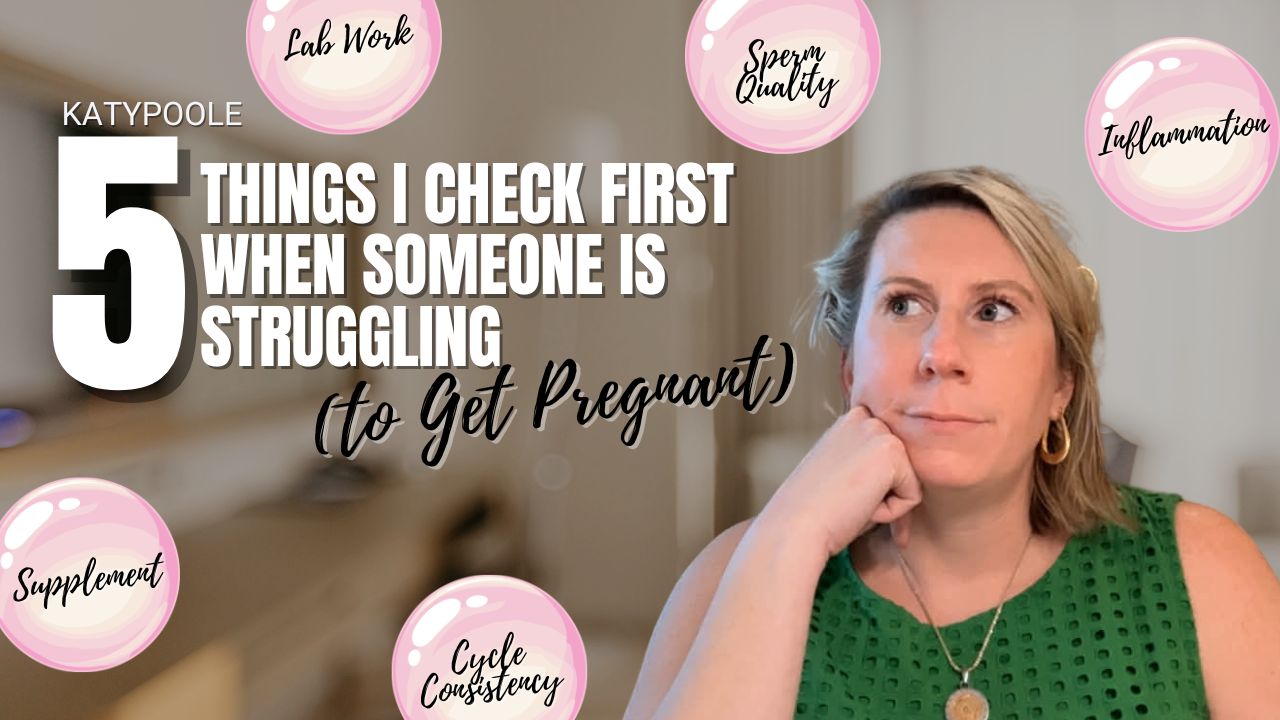
5 Things I Check First When Someone Is Struggling to Get Pregnant
If you’ve been trying to conceive for months and keep hearing the same thing, “everything looks normal,” it can feel incredibly frustrating.
Because if everything is “normal,” then why isn’t it working yet?
This is exactly where many people get stuck. They’ve done the basic fertility testing. They’ve followed the advice. And yet, they’re still not getting pregnant. At that point, it’s not just confusing, it’s exhausting.
Here’s what I want you to know: normal test results don’t always mean your body is functioning in a way that supports pregnancy.
In my work, I often see people who were told nothing is wrong, but when we take a deeper, more functional look, we uncover the missing pieces that were overlooked.
In this video, I walk you through the five things I check first when someone is struggling to get pregnant, so you can start identifying what might be getting in the way.
Why “Normal” Results Can Still Miss the Root Cause
Most standard fertility evaluations are designed to rule out major medical conditions. They are not designed to optimize your chances of conceiving.
That means you can:
- Have “normal” hormone levels but still experience imbalances
- Be told you’re ovulating but not ovulating optimally
- Have labs in range but not in a range that supports fertility
This gap between “normal” and “optimal” is where many fertility challenges live.
If you’ve been trying to conceive without answers, this is often the first place I look.
1. Reviewing Medications and Supplements That May Affect Fertility
One of the most overlooked factors in fertility is what you’re taking on a daily basis.
- Prescription medications
- Over-the-counter drugs
- Vitamins and supplements
- Herbal products
I’ve worked with clients who were doing everything “right” but were unknowingly taking something that interfered with ovulation, hormone signaling, or egg quality.
For example:
- Certain medications can suppress ovulation or alter hormone communication
- Excessive or unbalanced supplements can disrupt endocrine function
- Nutrient deficiencies can quietly impact reproductive health
Even something as simple as taking the wrong form of a vitamin or combining supplements incorrectly can make a difference.
This is why I always start with a personalized review rather than assuming more supplements are better.
If you’re not sure whether what you’re taking is actually supporting your fertility, it may be worth taking a more personalized approach. You can learn more about fertility-supportive nutrition and supplementation.
2. Why Basic Fertility Lab Work Is Often Not Enough
Basic lab testing often provides a limited snapshot. When someone is struggling to get pregnant, we need a much more complete picture.
- Full thyroid panel, not just TSH
- Blood sugar and insulin markers
- Reproductive hormones across the cycle
- Key nutrient levels such as vitamin D, iron, and B vitamins
One of the most common patterns I see is incomplete thyroid evaluation. Someone is told their thyroid is fine based on one marker, but when we run a full panel, we find imbalances that can directly affect ovulation and implantation.
Blood sugar regulation is another major factor. Even mild dysregulation can impact hormone balance and egg quality without obvious symptoms.
If you’ve been told your labs are “normal” but still aren’t getting pregnant, this breakdown of unexplained infertility and what might be missed in standard testing can help.
3. Interpreting “Normal” Labs Through a Fertility Lens
This is usually where we start uncovering what has been missed.
Lab ranges are based on population averages, not on what is optimal for getting pregnant.
I’ve had many clients come in with results that were labeled “normal,” but when we reviewed them more closely, they were far from ideal for fertility.
- Thyroid levels may be technically normal but too high for conception
- Progesterone may confirm ovulation but not be strong enough to support implantation
- Nutrient levels may be adequate for survival but not for reproductive health
This is why interpretation is just as important as testing.
When we look at labs through a fertility-focused lens, we often uncover subtle imbalances that explain why conception hasn’t happened yet.
If you’ve been told everything looks fine but still feel stuck, this is often where the missing answers are.
Thyroid function is one of the most commonly overlooked areas, and even subtle imbalances can affect fertility. You can learn more about how thyroid levels impact your ability to get pregnant.
4. How Cycle Health and Ovulation Impact Your Chances of Getting Pregnant
Your menstrual cycle gives us valuable insight into what’s happening internally.
But here’s the key point: having a monthly period does not always mean you are ovulating in a way that supports pregnancy.
- Cycle length and consistency
- Clear signs of ovulation
- Luteal phase length
- Symptom patterns throughout the cycle
Many people are surprised to learn that ovulation can be irregular or suboptimal even with a regular cycle.
- Ovulation may be delayed
- The luteal phase may be too short
- Hormone fluctuations may not support implantation
Tracking your cycle more intentionally can reveal patterns that basic tracking apps often miss. If your cycle feels confusing or inconsistent, this guide on how to track ovulation and understand your fertility signals more clearly can help.
5. Identifying Hidden Inflammation
Inflammation is one of the most common but least recognized contributors to fertility challenges.
- Hormone balance
- Egg quality
- Uterine environment
- Implantation
Some of the underlying causes I often see include digestive issues, food sensitivities, autoimmune activity, and chronic stress.
When we address inflammation at the root, we often see improvements not just in fertility, but in overall health.
This isn’t about quick fixes or temporary solutions. It’s about creating an internal environment where the body feels safe and supported to conceive.
6. A Proper Assessment of Sperm Quality
Fertility is a shared responsibility, yet sperm health is often under-evaluated.
A professional semen analysis evaluates sperm count, motility, morphology, and overall quality.
If a comprehensive semen analysis hasn’t been done yet, it should be part of your fertility evaluation. Sperm health is often overlooked, but it plays a major role in conception. You can learn more about factors that affect sperm quality and fertility outcomes.
Final Thoughts
If you’ve been trying to conceive and feel like you’re not getting real answers, it may be time to take a more personalized and in-depth approach.
You deserve more than being told everything is fine when it doesn’t feel that way.
When you take the time to look deeper at your hormones, cycle patterns, and overall health, things often start to make more sense.
If you’re ready to understand what might be missing and take a clearer path forward, you can apply for a free consultation to explore your next steps.